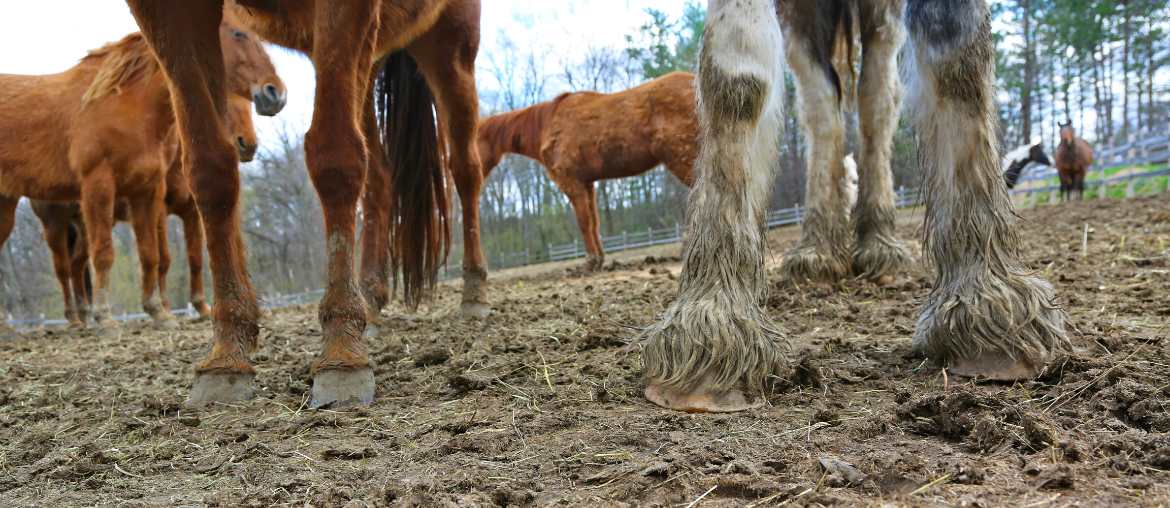
Mud and winter seem to go hand in hand and, for many horses, that means mud fever too. This common condition can range from a minor annoyance to something serious requiring veterinary attention, particularly if not identified early.
What is mud fever?
Despite the name, it’s not actually the mud that causes the problem. In fact, it’s a bacteria that thrives in wet, muddy conditions. Although it can be caused by different bacteria, the main one is called Dermatophilus congolensis. These bacteria enter the skin when it’s been compromised, whether this is by small cuts and scrapes, or skin that’s weak due to prolonged exposure to moisture.

Will all horses get mud fever?
No, not all horses won’t get mud fever, but ones who are compromised are more likely to. For example, horses that spend a lot of time with wet legs (and, therefore, have a compromised, softer skin barrier) are more susceptible, as are those who have small cuts and scratches on their legs. Equally, horses with a compromised immune system can be more likely to suffer with mud fever. Some people say that over washing the horse’s legs can also contribute towards a compromised skin barrier as it can soften the skin and even strip away some of the natural oils. This could also be a contributing factor.
What are the symptoms?
The key to effectively managing the condition and preventing it progressing start with identifying the symptoms quickly. Tell-tale signs include scabs around the lower leg, matted hair, heat and swelling, and soreness around the lower leg area. This is one reason why it’s so important to check your horse thoroughly each day as by catching mud fever early you’ll be able to treat quickly to help prevent the situation getting worse.
That said, it can be hard to check the legs of muddy horses, and sometimes the condition can develop quite quickly. If you’re ever concerned about your horse or feel that his mud fever has progressed and is causing a lot of discomfort, then calling the vet for advice is a good option. If untreated, mud fever can lead to bigger issues. And in some cases, there might be other causes.
Can you prevent mud fever?
There are many steps that horse owners can take to help reduce the likelihood of their horses getting mud fever. These include:
- Keeping the legs as dry as possible and/or making sure the horse has time for his legs to dry out completely during the day.
- Some people use mud socks to help provide a barrier between the lower leg and the mud. Don’t forget that in order to be effective and help the horse, these must be cleaned and dried each day.
- Specific creams can provide a barrier between the horse and the mud. These often have some mud repellent qualities too.
- There are also some powders available that can be used on the horse’s lower limbs.
- Avoid washing if you can. You might want to get the mud away from your horse’s legs but hosing them each day might not be the most effective way to do this as you’re prolonging the length of time the legs are cold and wet, and getting right down to the skin too. Letting the mud dry before brushing off and checking the legs then can be a better option.
How do you treat mud fever?
There are lots of different products available to help support the treatment of mud fever. The exact treatment will depend on a lot of different factors and should be carefully assessed. Possible solutions and products include:
- Antibacterial leg washes can be used to clean the areas impacted. These can also be used to help soften scabs before removal – do NOT pick dry scabs! Remember, warm water is much better than cold.

Hibiwash Skin Cleanser 500ml - Mud socks can put a barrier between the horse’s skin and any mud fever and the mud.
- Lotions that can be applied to the leg before turnout that have antibacterial qualities to support the skin and other properties to keep the mud away from the horse’s leg
- Barrier creams that also contains antibacterial properties and ingredients that support healthy skin and repair
- Powders that contain antibacterial ingredients and help to repel water and mud.
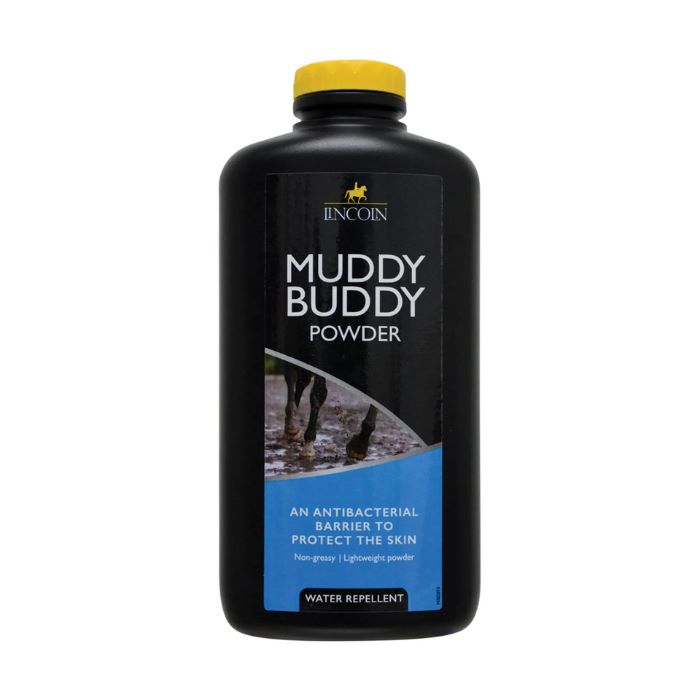
Lincoln Muddy Buddy Powder
There are also management factors to consider, such as reducing/eliminating turnout in muddy/wet conditions, potentially trimming hair around the affected areas to make them easier to treat, and ensuring that whenever the leg is cleaned/wet, it’s dried thoroughly
When to call the vet
As with any health condition, it’s really important to know when to call the vet. A lot of mild mud fever can be effectively managed through careful management and off-the-shelf products, but there are cases when you will need to call the vet for advice and, perhaps, more advanced treatment options. You should call the vet if:
- You’re in any way concerned about your horse’s health
- The leg has significant swelling
- The horse is lame due to the mud fever
- The infection is getting worse and spreading up the horse’s leg
- The horse is unwell – he may have a temperature or be lethargic
- The condition isn’t improving despite your best efforts
At RB Equestrian, we know how challenging winter horse care can be. As a multi award-winning, family-run equestrian retailer based in Milton Keynes, we stock trusted mud fever treatments, barrier creams, leg washes and turnout essentials to help keep your horse comfortable and healthy. Discover our favourite products to help keep mud fever at bay. Our knowledgeable team is always happy to offer practical advice in store or online, so you can care for your horse with confidence, whatever the weather.