Let’s be honest, there is nothing that tests a horse owner’s patience quite like fly season. And it tests every horse’s patience too.
It’s not just the constant head shaking, the stomping, or the ruined rides. It’s also the cost as sprays, rugs, masks, boots, and all manner of lotions and potions soon add up. And they don’t all work that well, or for that long, do they?
If you feel like you are losing the war against flies every summer, it’s time to look ahead and come up with a proper plan. Outsmarting flies isn’t about finding a magic solution. If you understand more about the bugs, you can be more strategic in how you’re planning to thwart their efforts to annoy your horse and disrupt your summer schedule.
At RB Equestrian, we regularly help horse owners choose fly protection that suits their horse’s needs and environment. So, here is your ultimate guide to reclaiming your peace (and your horse’s sanity) this summer.
Know your enemy
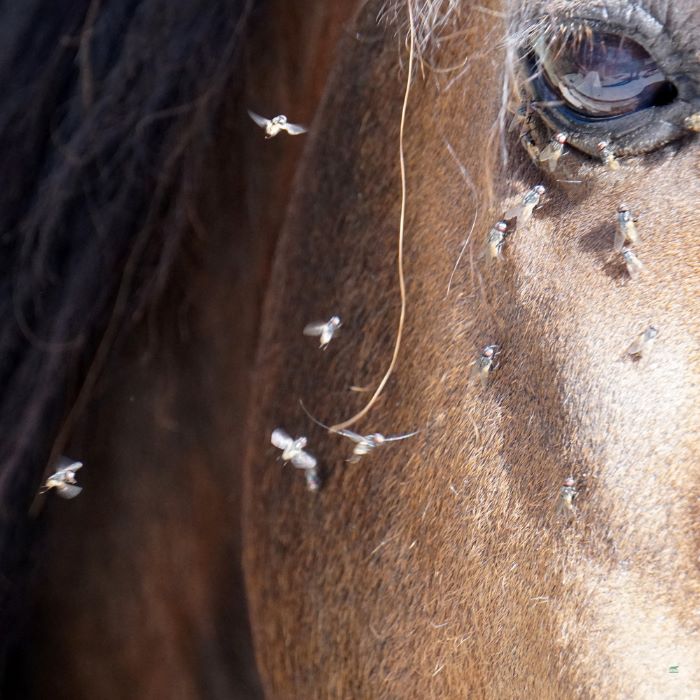
If you want to protect your horse, you need to know exactly what is landing on them:
- Black Flies. These tiny nuisances target areas with little hair, making a home inside your horse’s ears to suck blood.
- Midges. Most active at dawn and dusk, midges release saliva when they bite. It’s this saliva that triggers the itching rather than the bite itself.
- Crab Flies. These wingless, flat pests love to live between the hindlegs and around the tail.
- Stable Flies. These delights hang around the horse’s face and eyes, causing a lot of irritation
- Horse Flies. The ones we dread the most. Because they actually cut through the skin to feed, they leave nasty, painful lesions that are highly prone to swelling and skin reactions.
The repellent reality check
When your horse is miserable, it’s incredibly tempting to scroll through forums (or head over to social media!) to ask advice. There are many people promoting their very own ‘amazing’ concoctions, but they don’t always mention the relevant warnings that should come alongside their use.
A lot of homemade repellents contain essential oils, and these can be incredibly aggressive. Without precise concentration rates, combining random essential oils can cause severe chemical burns and skin reactions on your horse.
And keep in mind that when you’re buying a fly repellent off the shelf, from a trusted source, it’s had to prove that it’s actually safe for your horse! When buying a repellent, you need to look for the HSE (Health and Safety Executive) number on the label. In the UK, it is a legal requirement for fly repellents to be registered under Biocide and Pesticide regulations. That HSE number is your guarantee that the active ingredients are proven to be both safe for your horse and genuinely effective against bugs. If a product doesn’t have one, it’s illegal to market it as a repellent for a reason.
You don’t want to swap fly irritation for chemical burns, skin reactions, AND fly irritation, do you?
When you’re examining the labels, you might spot some of these ingredients:
- DEET: Originally formulated for the US military, DEET essentially short-circuits a fly’s scent receptors. They can still fly, but they get too confused to land. It typically offers a solid 6 to 8 hours of protection.
- Eucalyptus Citriodora Oil: A naturally derived option with a distinct lemon scent that disrupts insect odour receptors naturally.
- A note on Citronella: Historically a stable favourite, citronella cannot legally be marketed as a fly repellent because its long-term efficacy hasn’t been officially established under biocide laws. However, it can be used in general management and under FEI competition rules, it just wears a “grooming spray” label instead.
Always follow the manufacturer’s instructions when using fly repellents and check products are suitable for horses. It is also sensible to patch test, if you are using a new fly repellent.
The environment
The best repellent in the world will fail if your yard management is actively inviting flies to come over and breed. You need to make sure your foundations are solid. To do this…
- Break the cycle: Stable flies breed in muck heaps. Keep your stables clean, keep your muck heap managed, and regularly poo-pick your paddocks to destroy their nesting grounds.
- Sweat: Flies are drawn to horse sweat and stable stains. Wash your horse down thoroughly after exercise. You could use water or opt for a scent-masking wash to delete those tracking signals. There are lots of these available that smell great and help to remove sweat and grime.
- Stabling: Midges hate moving air but love standing water (like ponds) and dim light. If your horse is sensitive, bring them into a well-ventilated stable or ensure they have access to a field shelter during peak midge hours at dawn and dusk.
- Lights: Flies are drawn to artificial security lights at night. If your yard sensors are right next to a stable door, you are accidentally steering bugs directly to your horse. Move the light or adjust the angle.
Rugs and masks
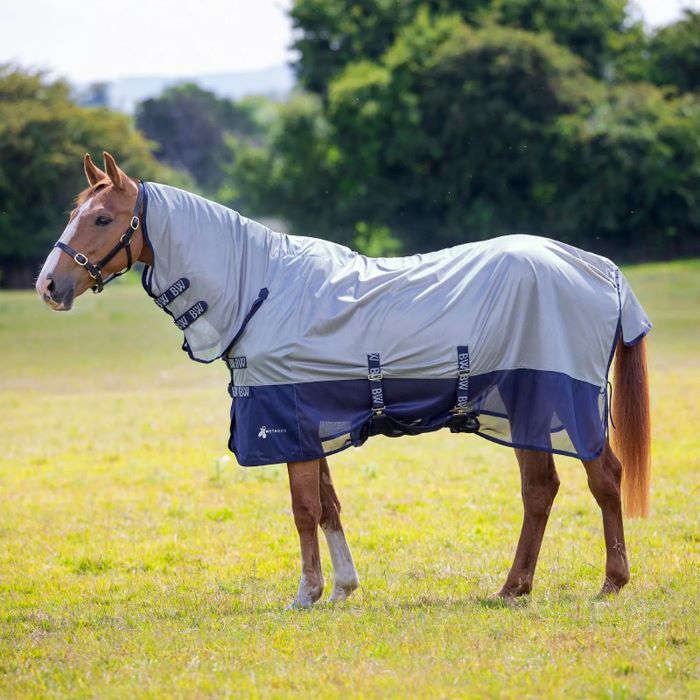
Rugs, masks and boots provide a physical barrier between the flies and the horse. This can be useful for horses that are very sensitive to flies and being bitten, as well as those with sweet itch. Sweet itch is an allergic reaction to midge bites that can cause severe itching and skin damage. These are usually highly breathable to help keep the horse cool. Some people apply fly repellents in addition.
Fly masks can be useful for horses that are irritated by flies around their face, including their eyes, ears, and noses. There are different designs available that cover different parts of the face, and there are even some you can ride in. Do have a look at our fly mask selection if this is a problem area for your horse.
If you are unsure which fly rug or mask is suitable, visit our Milton Keynes superstore and our team can help you compare the options available.
The plan
- Defeating flies comes down to consistency.
- Do your best to keep your yard as clean as possible, allow your horse access to sheltered spaces at key times.
- Consider fly rugs and masks.
- Experiment with different (legal!) fly repellents to see which helps to defeat the flies you really want to keep away!
Different horses react differently to flies, so it can take some trial and error to find the right combination of management and protection.
What's your ultimate secret weapon for surviving fly season?
Whether it’s a specific rug routine or a management trick that changed everything for your horse, we’d love to know! And don’t forget to check out our full range of fully fly products in store and online if you need a little inspiration and help this fly season.
How RB Equestrian can help
Fly season can be challenging, but a good management routine and the right protection can make a huge difference to your horse’s comfort. Whether you are looking for fly rugs, fly masks, fly repellents or everyday horse care essentials, you can shop online at rbequestrian.co.uk or visit our Milton Keynes superstore to see the options in person.
If you’re unsure about which fly mask or rug to choose, why not read our guide to fly rugs and fly masks to understand the different styles, features and levels of protection available?
Our team is always happy to help you compare products and find solutions that suit your horse. Don’t forget that RB Equestrian Customer Rewards gives you 4% back on qualifying purchases (excludes sale items). Visit us online or in store and get your horse ready to enjoy a more comfortable summer.
Frequently Asked Questions
The best approach is to use several methods together. Good stable and paddock management, approved fly repellents, fly rugs and fly masks can all help reduce the number of flies bothering your horse.
Yes, fly rugs create a physical barrier between insects and your horse. They can be especially useful for horses with sensitive skin or those affected by sweet itch.
Not always. Some homemade mixtures contain essential oils at unsafe concentrations which can irritate or burn the skin. Always use products according to manufacturer guidance and check suitability before use.
Midges are generally most active at dawn and dusk. Horses that are sensitive to midge bites may benefit from access to shelter or stabling during these periods.
If you are unsure which fly rug, fly mask or repellent is best for your horse, visit RB Equestrian’s Milton Keynes superstore or our web-site or speak to the team for advice.